England's earliest surviving record of a man being made a Mason is a diary entry. It is four lines long, it names eight other people, and it was written by a Royalist officer who had just been received into a lodge alongside the Parliamentarian colonel he had spent the last four years at war with.
“I Was Made a Free Mason at Warrington”
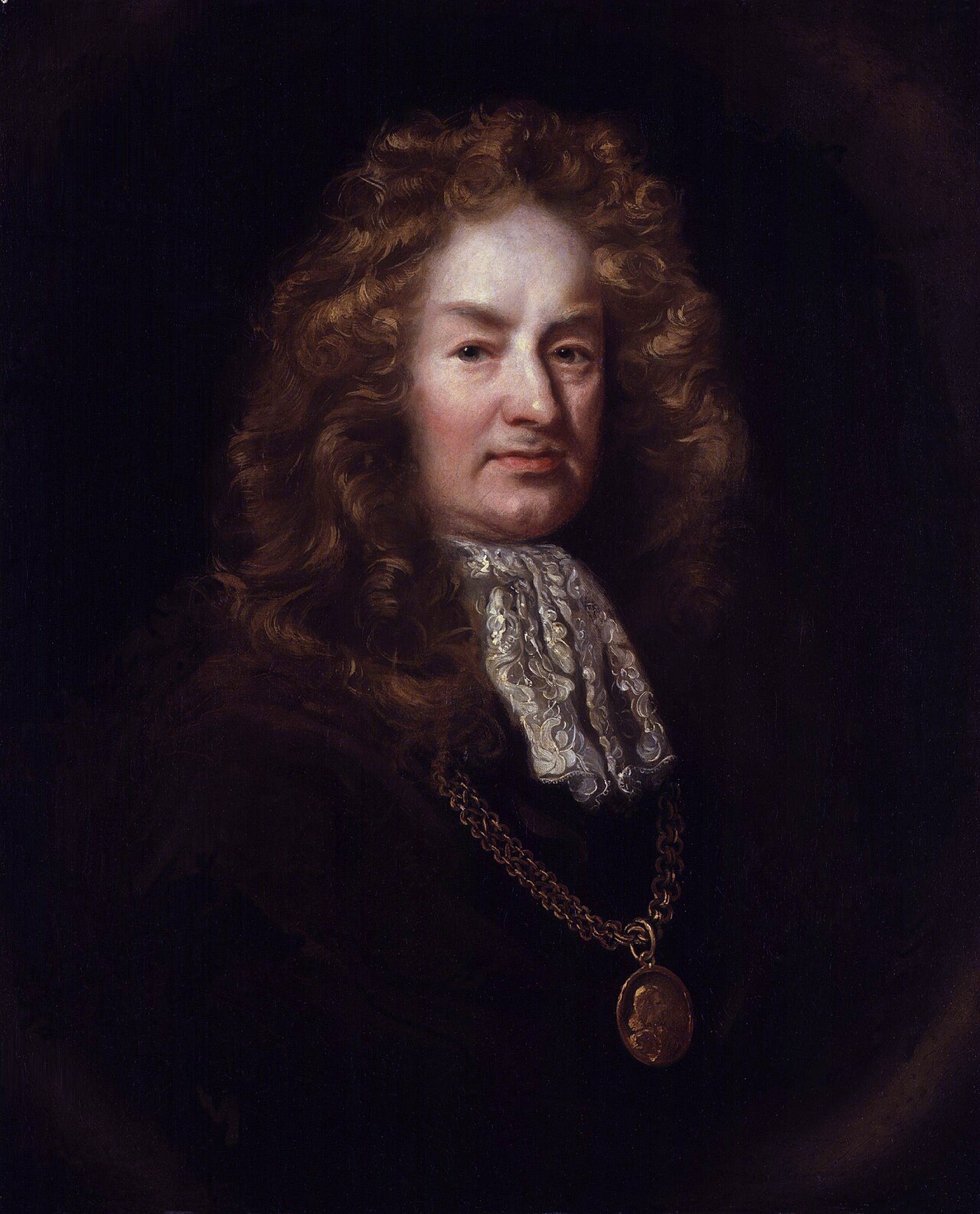
On 16 October 1646, at half past four in the afternoon, Elias Ashmole wrote in his diary that he had been made a Free Mason at Warrington in Lancashire, together with Coll: Henry Mainwaring of Karincham in Cheshire. He then did the thing that makes his entry so valuable to historians: he listed everyone present. Richard Penket, warden. James Collier. Richard Sankey. Henry Littler. John Ellam. Richard Ellam. Hugh Brewer.
That list is the whole reason we can say anything at all about English lodges in the 1640s. And what it says is quietly startling: several of the men named appear to have been non-operatives — gentlemen and tradesmen, not working stonemasons. This was not a lodge of builders that had admitted an outsider as a courtesy. By 1646 there was already, in a Lancashire town, a lodge substantially composed of men who had never dressed a stone.
Speculative Freemasonry, in other words, did not begin with Ashmole. He is simply the first Englishman we can prove was there.
A Royalist and a Roundhead in the Same Lodge
The date deserves a hard look. October 1646 falls in the immediate aftermath of the First English Civil War. Charles I had surrendered to the Scots in May. Oxford, the Royalist capital, had fallen in June. The country was exhausted, bitter, and full of men who had recently been trying to kill one another.
Elias Ashmole was a Royalist. He had served the King's cause as a captain, working chiefly as a mathematician attached to the artillery, and had been in Royalist Oxford. Henry Mainwaring was a colonel for Parliament. The two were cousins by marriage — and they were on opposite sides of a civil war.
In October 1646 they knelt in the same lodge on the same afternoon.
It is easy to make too much of a single entry, and Ashmole does not tell us what the two men said to each other. But the fact stands on its own. At the very first moment the English record opens a window onto a Masonic lodge, what is visible through it is two men from opposite sides of a national bloodletting, meeting on the level.
The Man Himself
Ashmole is worth knowing apart from his Masonry. He was one of the great magpie intellects of the seventeenth century — an antiquary, herald, alchemist, astrologer, botanist, and collector, at a moment when those categories had not yet separated.
- He published Theatrum Chemicum Britannicum in 1652, gathering English alchemical poetry that would otherwise very likely have been lost.
- He was made Windsor Herald in 1660 and produced, in 1672, a magnificent illustrated history of the Order of the Garter that remained the standard work for centuries.
- He was a founding Fellow of the Royal Society in 1661.
- He gave his collections — his own, plus the celebrated Tradescant cabinet of curiosities, plus his library and manuscripts — to the University of Oxford. The building raised to house them opened in 1683 as the Ashmolean Museum, and is commonly reckoned the first purpose-built public museum in Europe.
He is, in short, exactly the sort of man the early speculative lodges attracted: curious about everything, comfortable with symbol and allegory, serious about record-keeping, and interested in institutions that outlast their founders.
Thirty-Six Years Later
Ashmole's second Masonic diary entry comes in March 1682, when he attended a lodge held at Masons' Hall in London. He notes with evident satisfaction that he was the senior Fellow among them — thirty-five years having passed since Warrington — and that the brethren afterward dined at the Half Moon Tavern in Cheapside, where he records “a noble dinner.”
Two entries, thirty-six years apart, from the same pen. Together they are among the earliest direct references to Freemasonry in England, and they bracket a period from which almost nothing else survives.
What the Entry Teaches
Three things, and each of them matters for how we tell our own story.
First, the Craft in England was already speculative in the 1640s. Whatever happened in 1717 was a reorganization of something that had been going on for generations, not an invention.
Second, the evidence is thin and accidental. We know about Warrington because one participant happened to be an obsessive diarist whose papers were preserved. How many other lodges met in the 1640s, we simply cannot say. The honest posture toward early Masonic history is humility.
Third, the fraternity's central claim about itself is visible in its earliest English record. Freemasonry says it can bring together men whom the world has divided. On 16 October 1646, in Warrington, that was not an aspiration printed in a monitor. It was two cousins from opposite armies, at the close of a civil war, being made Masons on the same afternoon.